|
|
https://www.puerto-escondido.mx/en/2026/05/12/atms-currency-exchange-puerto-escondido/
Every year, travelers arriving in Puerto Escondido lose money they never had to lose — not to pickpockets, but to ATM fees, predatory exchange rates, and a quiet trick called Dynamic Currency Conversion. Getting your pesos exchange in Puerto Escondido right before you land can save $50–$150 on a typical week-long trip. This guide covers which ATMs charge least, where the honest casas de cambio are, and the one question you must answer correctly at every card terminal.
The most common mistake: landing at Aeropuerto Puerto Escondido (PXM) and exchanging cash at the airport desk for convenience. Airport exchanges in Mexico typically offer rates 8–15% below the mid-market rate. On a $500 USD exchange, that is $40–$75 gone before your first meal.
The mid-market rate — the real rate you see on XE.com — is what banks charge each other. No retail service gives you that rate exactly, but the spread between your best and worst option in town is wide enough to justify five minutes of planning. For full pre-trip planning, our 4-day Puerto Escondido itinerary also covers daily spending estimates by neighborhood.
Use ATMs physically attached to bank branches — primarily along Avenida Pérez Gasga and near the Mercado Benito Juárez. The four major banks operating in town:
Withdraw larger amounts, less often. If your home bank charges a flat $5 fee per transaction, one 6,000 MXN withdrawal beats six 1,000 MXN withdrawals. Most BBVA machines cap at 8,000 MXN per transaction — well above what most home banks' daily limits allow anyway.

Unbranded ATMs inside OXXO convenience stores, hostels near Zicatela, and small shops around La Punta charge 150–300 MXN per withdrawal — two to four times the bank rate — with no consumer protection if something goes wrong. Use them only if genuinely stranded with zero cash.
Dynamic Currency Conversion (DCC) is the most consistently executed financial scam in international travel. When you pay by card or withdraw at an ATM, the terminal offers to charge you in your home currency (USD, EUR, GBP) rather than pesos.
It looks helpful. It is not. The merchant or ATM operator sets the exchange rate — typically 3–7% worse than your bank's rate — and keeps the spread.
Whenever a terminal asks "Pay in USD or MXN?" — always choose MXN. This applies at ATMs, restaurants, hotels, and tour bookings. No exceptions. If a terminal processes in USD without asking, that is automatic DCC — you can dispute it with your bank, but attention upfront is easier.

Casas de cambio along Avenida Pérez Gasga and near the Zócalo generally beat airport rates and often match bank ATMs — sometimes better on days when bank conversion margins widen. For large cash exchanges (over $300 USD), shop two or three offices and compare their displayed buy rate against the XE mid-market rate.
| Option | Rate vs. Mid-Market | Flat Fee | Verdict |
|---|---|---|---|
| Airport exchange desk | 8–15% below | None | Emergency only |
| Bank ATM (BBVA, Santander) | 1–3% below | 50–80 MXN | Best for most |
| Casa de cambio (centro) | 2–4% below | None | Good for large amounts |
| Travel card (Wise / Revolut) | 0.5–1% below | Low/none | Best overall rate |
| Standalone ATM (OXXO, hostel) | 3–5% below | 150–300 MXN | Last resort |
| DCC (paying in USD) | 3–7% below | None explicit | Never |
Puerto Escondido is still a cash-dominant destination. Most surf instructors, beach food stalls, colectivo taxis, market vendors, and smaller restaurants do not accept cards. Carry 400–600 MXN for daily spending and replenish at a bank ATM every two to three days rather than making frequent small withdrawals.
Whatever card you bring: notify your bank before traveling to Mexico. A frozen card in Puerto Escondido when you are cashless is a genuine problem. Also consider travel insurance that covers emergency cash assistance if your card is compromised abroad.

Yes — PXM airport has at least one ATM inside the terminal. Treat it as a stopgap only: withdraw 200–300 MXN for your taxi into town, then use a bank-branch ATM once you are settled. Airport ATMs carry the same unfavorable rates as exchange desks.
The USD/MXN rate changes daily. Check the live mid-market rate at XE.com before your trip and use it as your benchmark. Any rate within 2–3% of XE is acceptable; 5% or more below it is exploitative. As a rough guide, 1 USD has ranged between 17–19 MXN through early 2026.
Some larger tourist-facing hotels and restaurants accept USD, but they set their own conversion rates — always worse than a bank ATM. Always pay in Mexican pesos for the best value, and carry enough pesos for markets, taxis, and street food where USD is not accepted.
No US bank branches operate in Puerto Escondido. You will be using Mexican bank ATMs — BBVA first, Santander second. If you hold a Charles Schwab account, it reimburses foreign ATM fees after the fact, making any bank ATM effectively free.
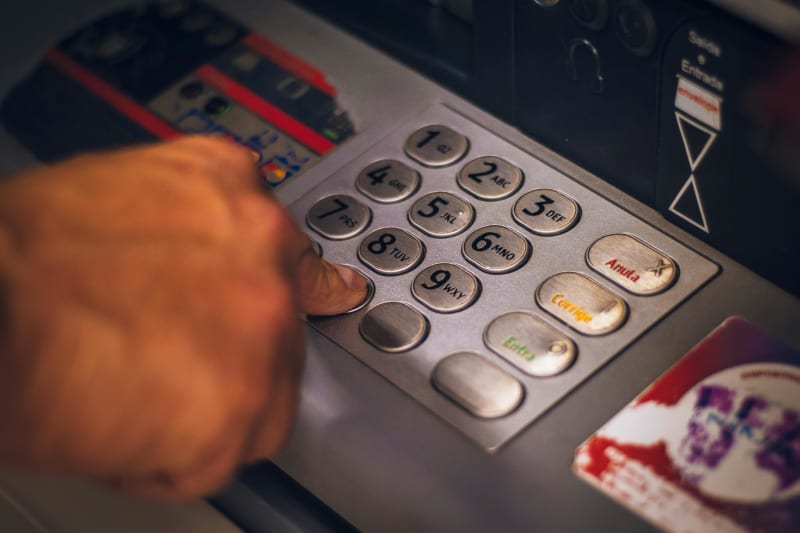
Use ATMs attached to bank branches, not standalone units. Wiggle the card slot firmly — genuine slots do not move. Check for anything overlaid on the keypad. Cover your PIN entry every single time. If a machine retains your card or behaves strangely, call your bank's international number immediately and alert the branch.
With your cash logistics sorted, the only thing left is how to spend it well. Browse our Puerto Escondido tours and experiences — from bioluminescence nights on Laguna Manialtepec to big-wave sessions at La Punta. Book ahead; the best spots fill fast, and your pesos will go exactly where they should.
 |
|
Turismo Deportivo en la Costa de Oaxaca  Zipolite se prepara para ser la sede ... - Instagram Zipolite se prepara para ser la sede ... - Instagram... Zipolite se prepara para ser la sede de grandes eventos deportivos, y el Zipolite Epic Run es la experiencia que no te puedes perder. Más que una ... |

| In the Footsteps of Oaxaca's Ancient Hillside Builders, an Architectural Refuge Arises Over the Pacific Zipolite, long known as a bohemian beach town and one of Mexico's only naturist beaches, has grown well beyond that niche. Still a popular destination ... |
In the Footsteps of Oaxaca’s Ancient Hillside Builders, an Architectural Refuge Arises Over the Pacific
Relocating to Mexico provided artist Carter Peabody with a renewed sense of purpose and inspired the creation of a purpose-driven ecocommunity in Zipolite focused on blending design with nature
Architectural Digest editorial staff were not involved in the creation of this content.
The Zapotec civilization has shaped Mexico’s most linguistically diverse state of Oaxaca for more than three millennia. With roots that began in the Central Valleys near present-day Oaxaca City, the society known as “the Cloud People” expanded from the lowlands into the lush hills of the Sierra Madre to establish one of Mesoamerica’s earliest and most enduring mountaintop civilizations, with an elevated identity that still defines them today.
The impact of the Zapotec people within the country’s most biodiverse state stretches broadly. From an architectural and design perspective, they were meticulous builders, shaping impressive terraced settlements and notable stone-built civic spaces attuned to the contours of the terrain, reinforcing communal and ritual life.
Thousands of years later, on those same Oaxacan lands still influenced by the industrious Zapotec today, a unique purpose-driven enclave has emerged that mirrors the path laid out by those masterful hillside builders. Atop a dramatic plot that cascades over Zipolite and the Pacific, Rancho Aragón has taken shape as a new type of conscious community centered on personal growth, creativity, and genuine connection in nature.
“Mexico inspired me to pursue a more meaningful, artistic, and centered reality. The desire is not only to create an idyllic refuge in this remarkable setting, but to build a community at Rancho Aragón rooted in natural beauty and authentic connection,” explains Peabody.
That same stretch of Oaxacan coastline that inspired Peabody has become one of the most sought-after destinations in the Americas, drawing Mexicans and international travelers alike, from nature lovers and surfers to artists and creatives seeking a more authentic experience.
Peabody’s retreat rests on the edge of Zipolite on a 20,000-square-meter plot, about a 10-minute walk from the town, its beaches, and Playa Aragón. Zipolite, long known as a bohemian beach town and one of Mexico’s only naturist beaches, has grown well beyond that niche. Still a popular destination for LGBTQ travelers, it now attracts a broader mix of international adventurers, remote workers, and Mexican weekenders, giving this stretch of the Oaxacan coast a notable global profile.
The property is also located within minutes of the popular towns of San Agustinillo and Mazunte. San Agustinillo, a laid-back beach village with an almost European vibe, is known for its stunning bay and slower pace. Minutes to the north, the larger town of Mazunte has built a strong identity around ecotourism and conservation. Home to a large turtle reserve, it is also designated by the Mexican government as a Pueblo Mágico, a special distinction given to towns recognized for their extraordinary character and appeal. An hour to the north, Puerto Escondido, the largest city on this stretch of coast with more than 30,000 residents, is known internationally for its surf culture. With the recent completion of the Barranca Larga-Ventanilla Highway, a new corridor from Oaxaca City to the coast has dramatically increased access, cutting the drive from seven hours to three hours.
For Peabody, the location was essential to the concept. Beyond the rarity of a site situated above the ocean with panoramic views, there was a deliberate choice to stay close to the beaches and town while keeping enough distance to preserve quiet and perspective. The intent for Rancho Aragon was never just building villas on a hillside. It was conceived as a grounded conscious environment for those who feel stuck in a loop, explains Peabody. Built around personal growth, healing, and a steadier daily rhythm, the refuge reflects the shift that Mexico and the coastline offered Peabody himself. It also aligns with his broader interest in exploring how people inhabit places, and how places in turn shape the lives lived within them.
Beyond the location and the communal core, nature is perhaps the project’s most important tenet, reflected in an eco-conscious approach throughout. The architecture reinforces that emphasis through natural materials and earth tones that blend into the hillside. Set on private parcels, the one- and two-bedroom casitas rise two or three stories, each facing the Pacific. Multilevel exterior spaces extend the living area outdoors. While inside, natural materials and handcrafted furniture by local Oaxacan artisans reinforce the project’s connection to the surroundings. Each parcel ranges from roughly 400 to 800 square meters, with road access, power, and water already in place. The casitas are thoughtfully set into the land’s natural contours around an integrated ecological reserve. Nature is not just part of the setting but central to how Peabody imagines people living here.
“The land is the origin of everything. It’s not just a place where something is built—it’s something to be honored. Caring for it means designing with respect, listening to the surroundings, and understanding that Rancho Aragón must be in dialogue with this place, not imposed upon it,” explains Peabody.
The project also reflects the personal path that brought Peabody to Mexico. He studied art and film, and spent more than two decades in New York directing and producing before relocating to Mexico City. Now working primarily in photography, he explores the relationship between people and place, moving between portraiture and landscape as two sides of the same inquiry.
In that sense, Rancho Aragón feels less like an invention than a continuation. By focusing on art and personal well-being, Peabody was inspired to build a refuge that reads like a conversation between places and times, across ancient Oaxaca, contemporary Mexico, and today: a return to the self, reclaimed on higher ground.