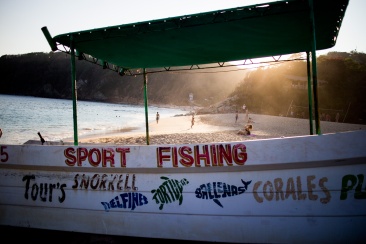
Budget,
Backpackers,
Surfers,
Beach Lovers,
Naturalist,
Hippie,
Sun and Sand worshipers,
Off the Beaten Path Paradise! Everyone is welcome at Zipolite!
Eruptions seen at both El Popo and Colima Volcano this month
Mexico News Daily | Tuesday, January 26, 2016
Two of Mexico’s most active volcanoes have been somewhat more active than usual in recent weeks, and the ash fall from one of them closed Puebla’s airport yesterday.
The airport resumed operations at 7:00am today after crews finished cleaning volcanic ash from the runways overnight.
The airport was closed yesterday afternoon after exhalations by the volcano Popocatépetl.
The National Disaster Prevention Center (Cenapred) reported there were nine hours of activity yesterday, which included eight eruptions, and further activity again early this morning, when increased incandescence was visible during exhalations.
Also known as El Popo, the volcano is situated 55 kilometers southeast of Mexico City. Thousands of people were evacuated from their homes during its last major eruption in 2000.
Straddling the border between the states of Colima and Jalisco, the Colima Volcano was active earlier this month. Explosions with high ash content, accompanied by eruption lightning, were seen on January 3.
The renewed activity at Colima, also known as the Volcano of Fire, has prompted tour company Volcano Discovery to offer a four-day expedition where participants can learn more about the volcano with a geologist-volcanologist guide and take photos.
The February 15-19 tour will use various viewing locations both day and night, while accommodation will be provided about seven kilometers from the summit.
A fragment of rock from El Popo during an eruption in May 2013.
- See more at: http://mexiconewsdaily.com/news/el-popos-ash-fall-closes-puebla-airport/?utm_source=Mexico+News+Daily&utm_campaign=c5e7743172-January+26&utm_medium=email&utm_term=0_f1536a3787-c5e7743172-348153685#sthash.KJxjHfPe.dpuf
Mexican authorities recovered a total of 12,188 abandoned Golfina turtle eggs along the shores of the Pacific coast states of Michoacan and Oaxaca.
According to a report from News Ghana, Profepa, Mexico's environmental protection agency, oversaw the rescue for the abandoned turtle eggs.
The environmental inspectors joined forces with the Mexican navy for the project, a report from Fox News Latino said. The team recovered two nests and 188 eggs in Mexiquillo and Barra Turpina beaches of Michoacan. An additional 11 nests and about 12,000 eggs were found at the beach of Morro Ayuta in Oaxaca.
After the operations, the recovered eggs were brought to the Mexican Turtle Center for incubation.
An endangered specie, the Golfina turtle is known to be the smallest sea turtle. Michoacan and Oaxaca are both considered to be primary nesting spots for the creature, which is why conservation efforts are being implemented in the area.
The past several months have shown a surge in the efforts of protecting sea turtles and other marine creatures in Mexico. Last September 2015, it was reported that authorities have taken to using drones to spot and identify poachers who prey on the turtle eggs that have become a delicacy in the country.
According to a report from Discovery, the drones were equipped with a GPS system and a camera to better find what locals call "hueveros" or egg robbers. The pair of drones that were first used by the officials were supplied by Mexico's College of Environmental Engineers.
Selling and eating turtle eggs have long been practiced by the Chontal and Zapotec indigenous communities. Although it has been banned since 1990, there are still poachers who hunt for the eggs for its demand.
On the opposite side of the world, over 300 Olive Ridley turtles and a dolphin were found dead along the shore of Puri Beach, India recently, according to Times of India. Dead turtles are not unusual to see washed up by the beach, but the massive number caught the attention of locals.
"This is unfortunate that a large number of Olive Ridley turtles died on the beach," Puri collector Arabinda Agarwal said to the media. "It seemed they were hit by trawlers."
Beach Protection Council of Odisha (BPCO) Jagannath Bastia explained that implementation of the fishing ban during nesting periods are important to keep marine life protected saying, "Trawlers continued to carry out illegal fishing during the ban period due to poor patrolling by marine police and forest authorities."


 A fragment of rock from El Popo during an eruption in May 2013.